Launch offer — valid today only

📄 Digital book in PDF · read it on your phone or print it

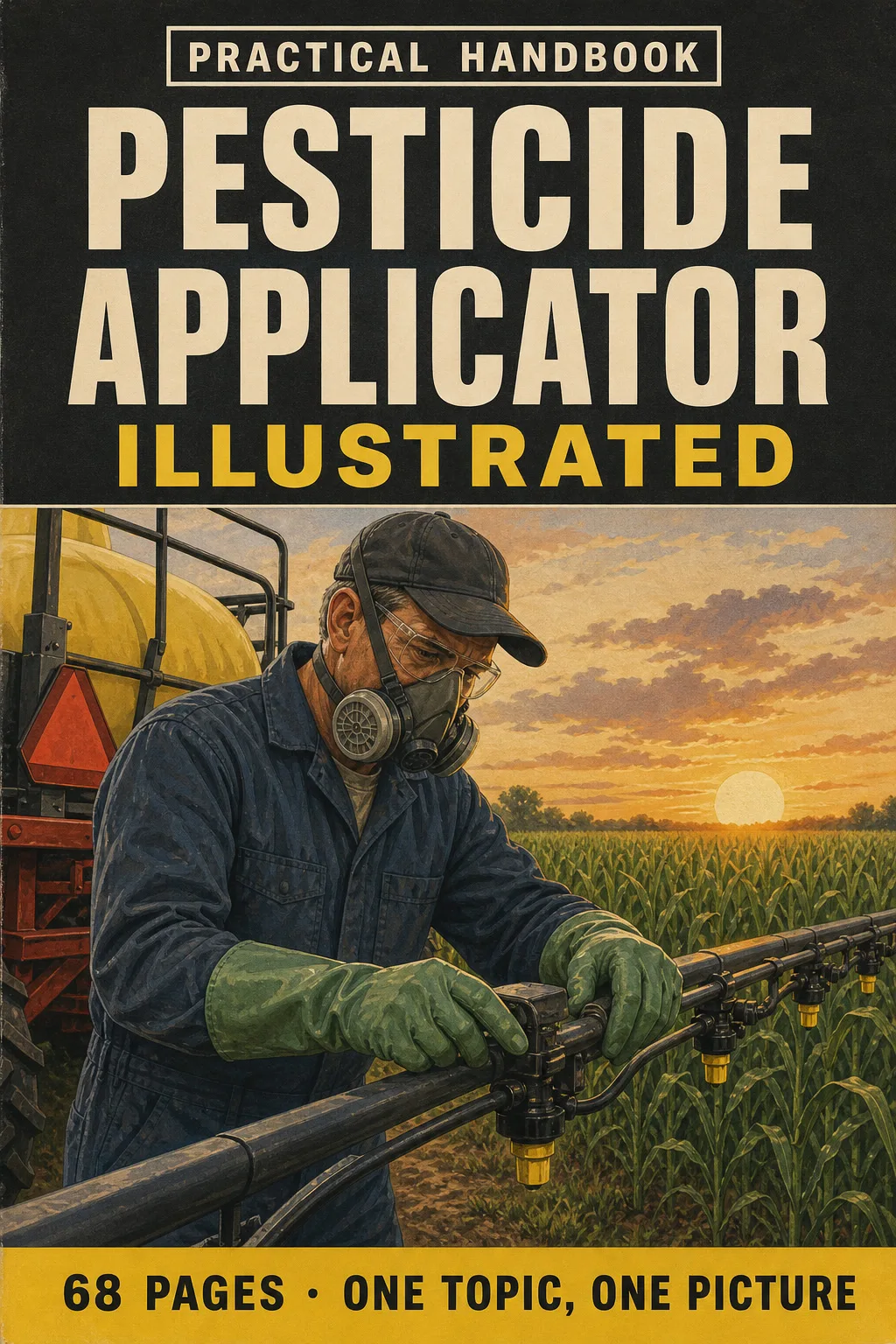
The Category 1A Pesticide Applicator Exam in Drawings One Topic on Every Page

Signal words, REI and PHI, PPE, IPM, formulations, tank-mix order, sprayer calibration, drift and storage. Every topic gets its own page: the drawing first, then what you need to remember. 68 illustrated pages.

START STUDYING THIS WAY

🔒 Secure checkout · PDF by email · 30-day guarantee

Every topic, its own pageEach label step and calibration problem drawn, with the explanation right beside it
68 illustrated pages8 parts, from your license and the exam to the final review
Up-to-date sourcesEPA 40 CFR 171 and 170, FIFRA and state Category 1A study manuals
PDF by emailFormat

Look Inside the Book

Every page has one big drawing and a box with the numbers and steps you need to know:

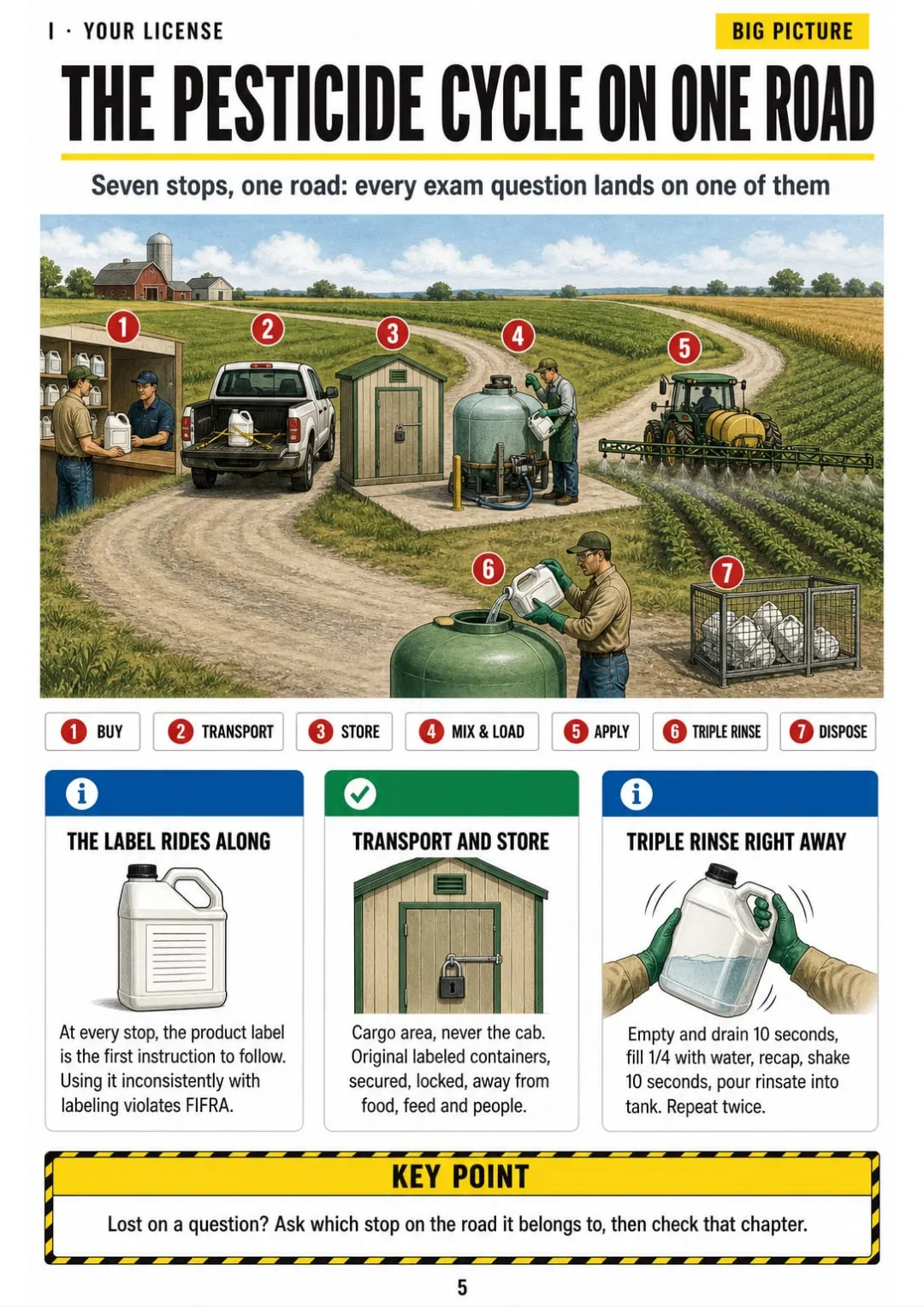
Buy, transport, store, mix and load, apply, triple rinse, dispose: the whole exam on one road.
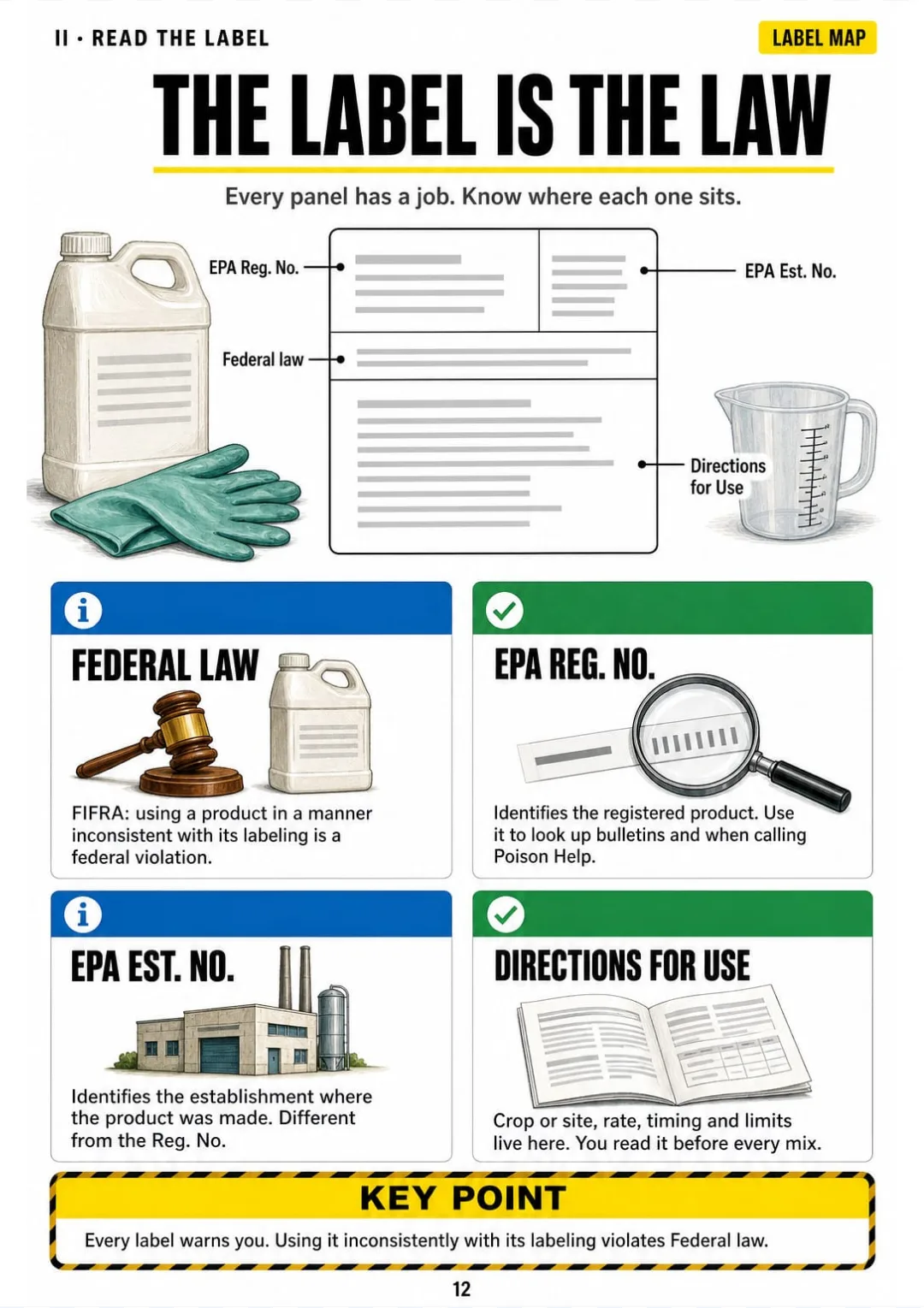
The label map: brand name, ingredients, EPA Reg. No., signal word, precautions, directions for use.
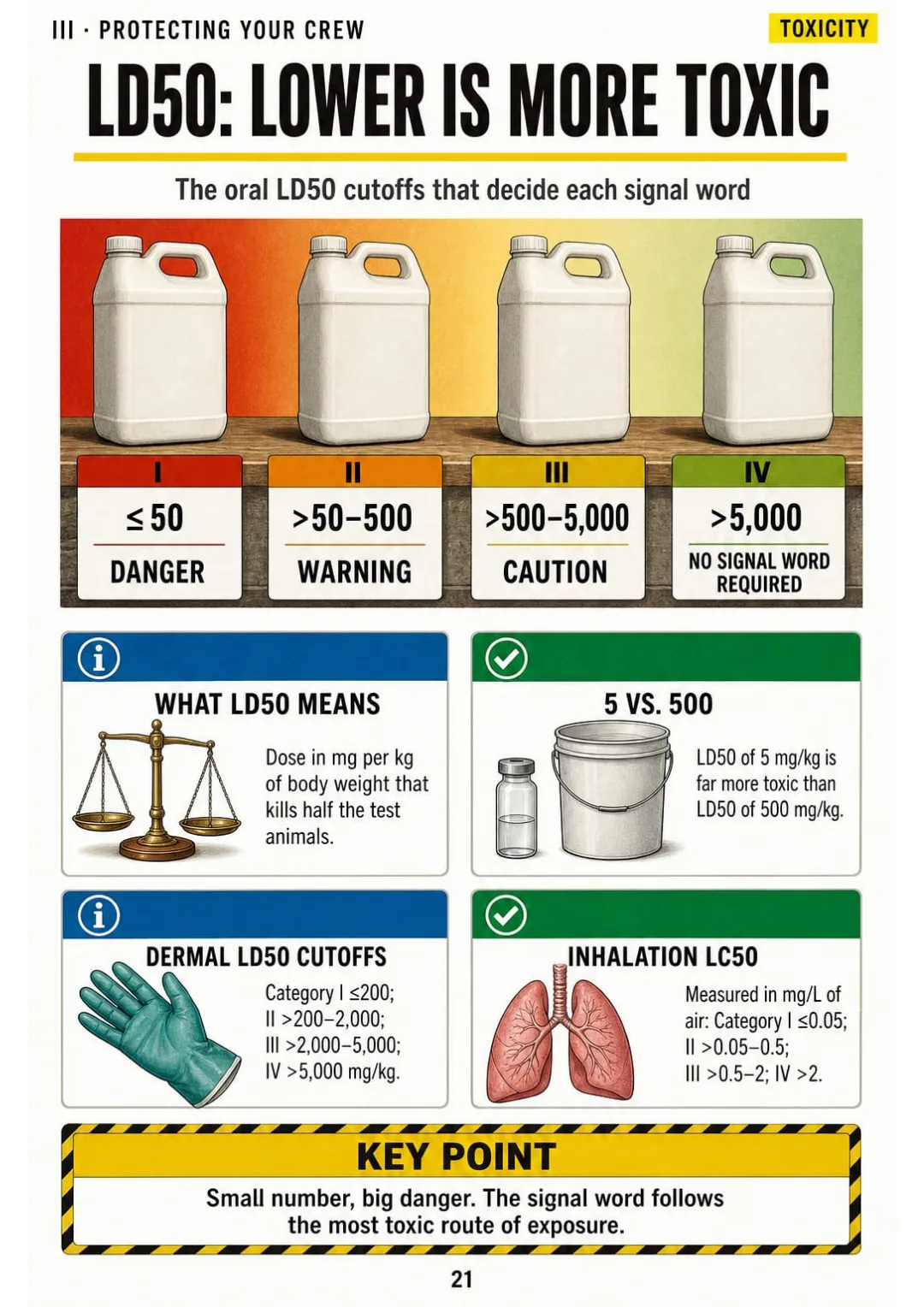
Oral LD50: ≤50 DANGER · 50–500 WARNING · 500–5,000 CAUTION · >5,000 none required (40 CFR 156.62)
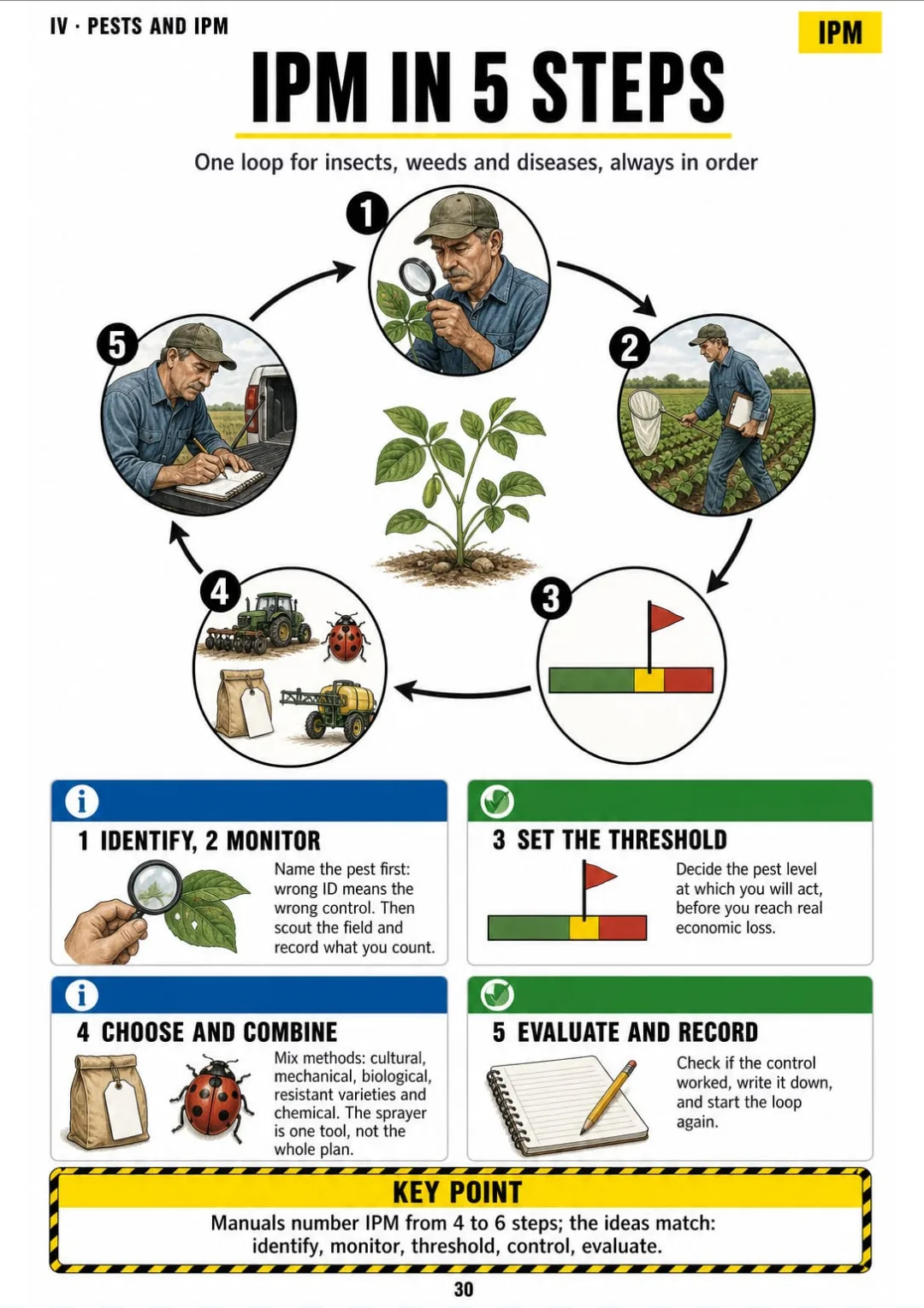
IPM as a 5-step loop: identify, monitor, set the threshold, combine controls, evaluate and record.
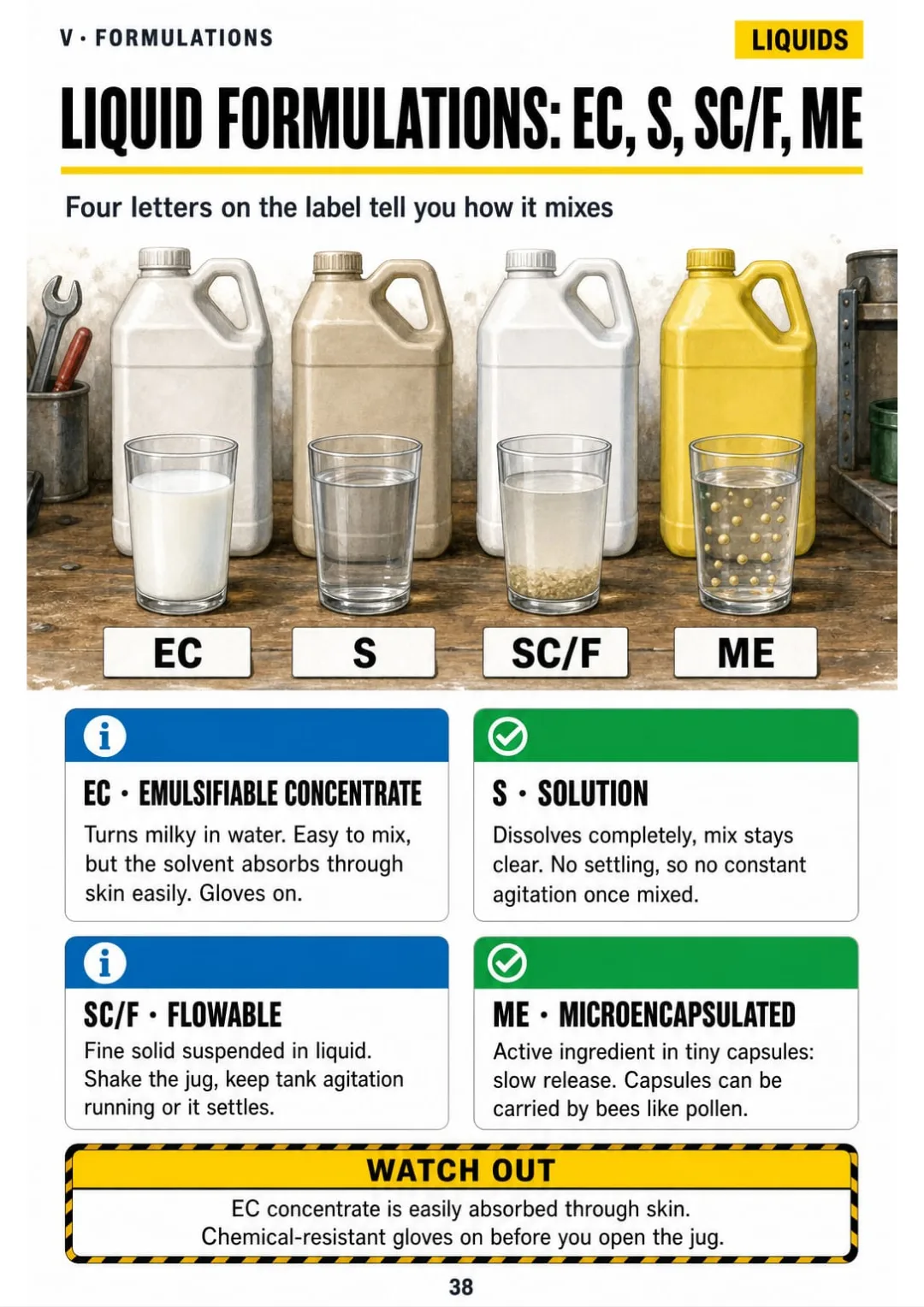
EC turns milky, S stays clear, SC/F settles, ME is encapsulated.
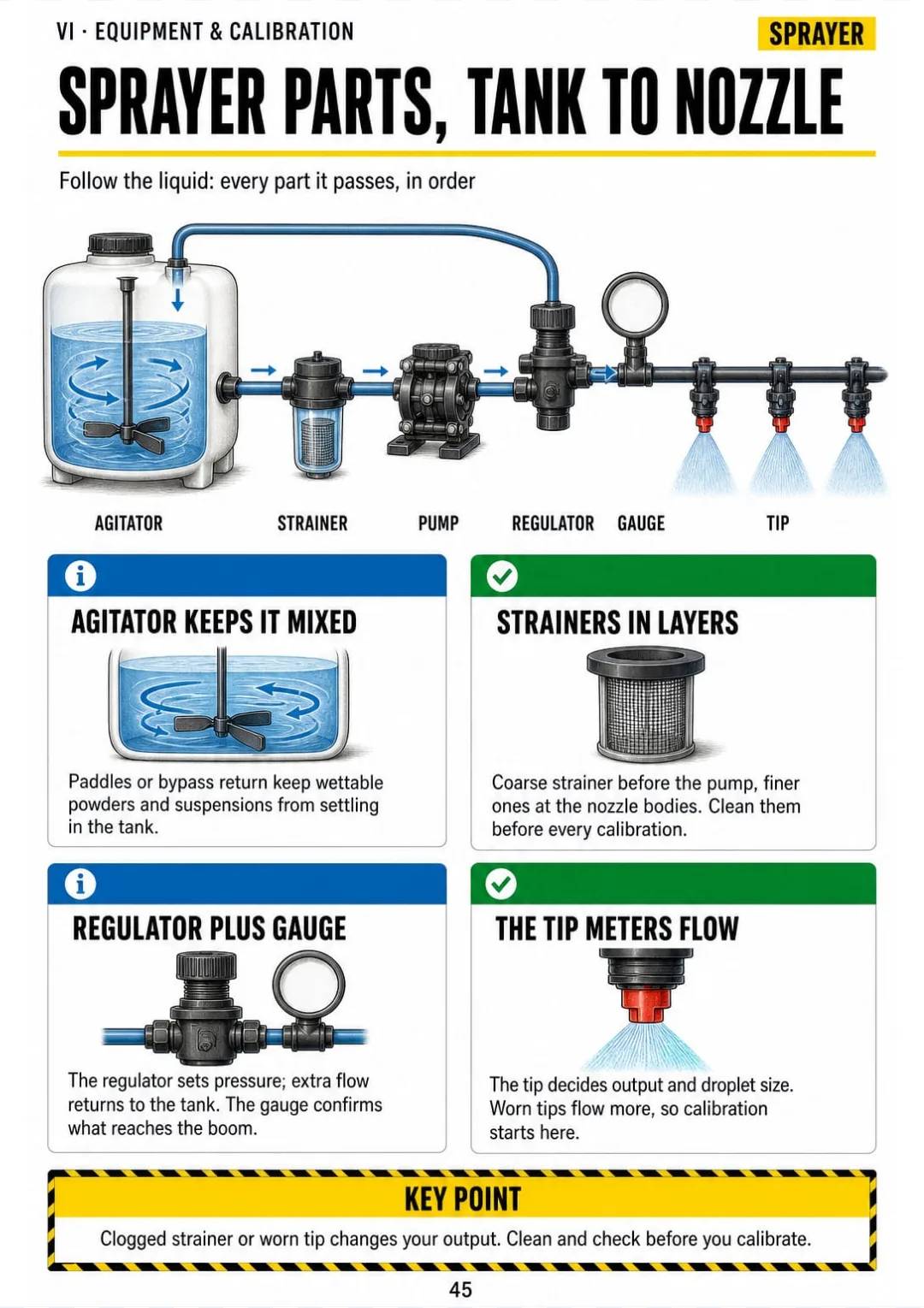
Tank → strainer → pump → regulator → gauge → boom → tip, drawn in one flow.
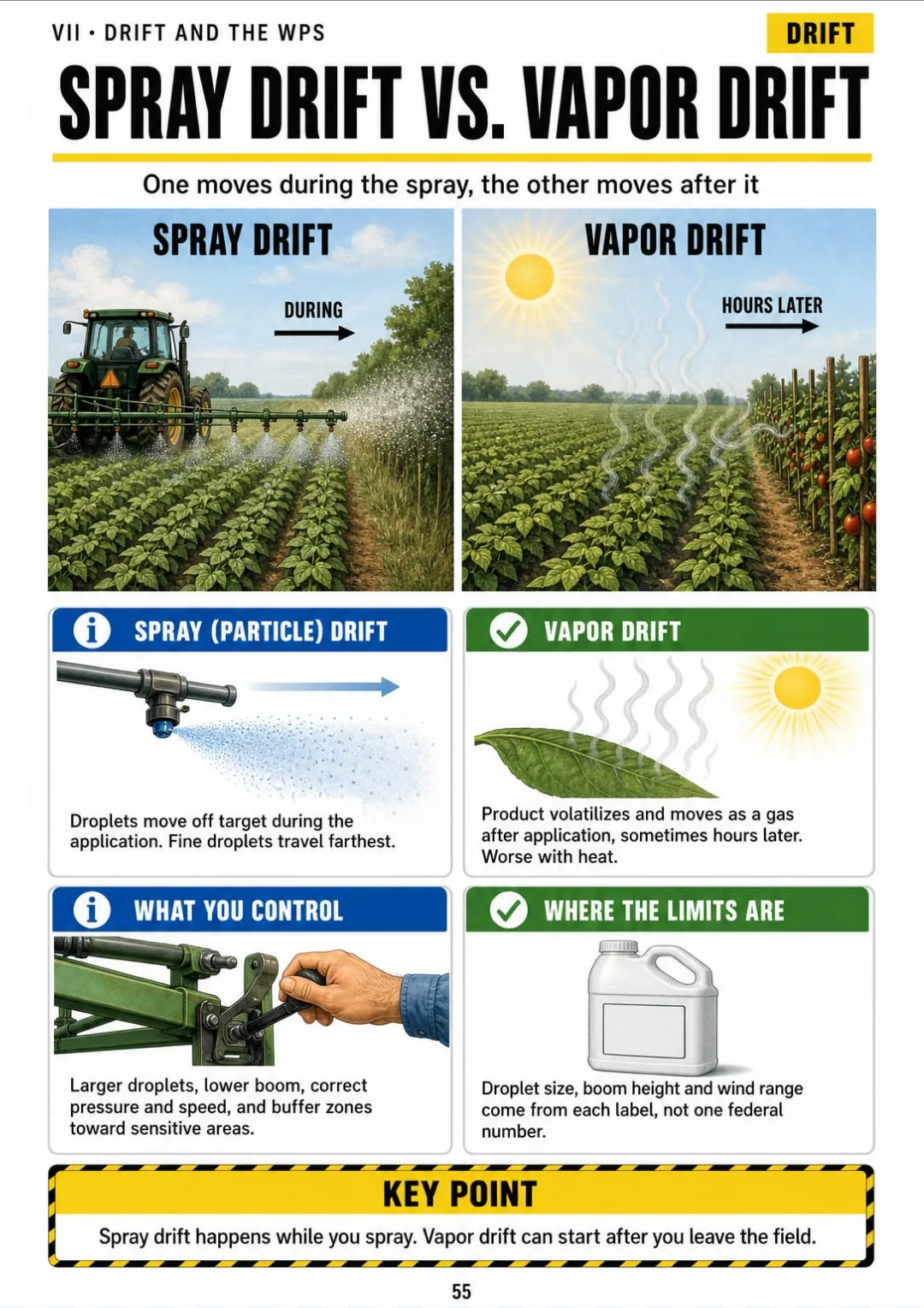
Particle drift during the spray vs. vapor drift after it, worse with heat
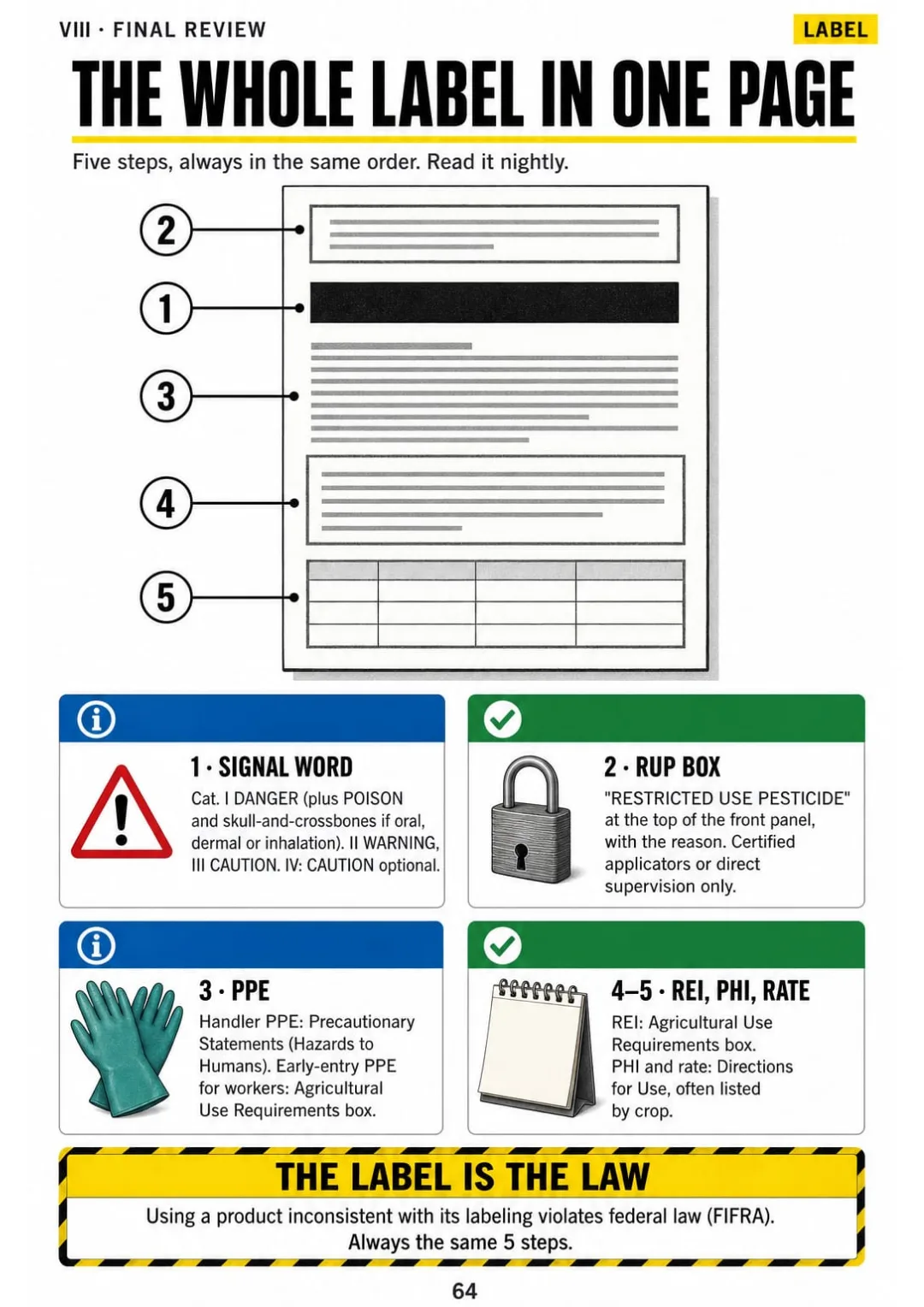
Signal word, RUP box, PPE, REI/PHI and rate: the 5 steps marked on one label.

Swipe to see more →

These are real pages from the book. The table of contents is the full one: 8 parts and 64 topics.

The Problem Isn't You. It's How It Was Explained to You.

You're at the kitchen table after a long day, the state manual open to toxicity. LD50, LC50, milligrams per kilogram, four categories. You read the page twice. At breakfast you can't say which number goes with WARNING.

The manual explains it in paragraphs: the dose lethal to 50% of test animals, in mg/kg, where a lower value means greater toxicity. Lower means more dangerous, which feels backwards, and the cutoffs are buried mid-sentence.

Oral LD50: ≤50 DANGER · 50–500 WARNING · 500–5,000 CAUTION · >5,000 none required (40 CFR 156.62)

In this book, LD50 is one page. A scale from most toxic to least, with the signal word printed on each band: an oral LD50 of 50 mg/kg or less is DANGER, 50 to 500 is WARNING, 500 to 5,000 is CAUTION. The number and the word on the label, seen together.

The rest works the same way: REI and PHI side by side, calibration in 4 steps, tank-mix order, spray drift vs. vapor drift. Each one on its own page.

So when the exam gives you an LD50 of 300 and asks for the signal word, you picture the page and answer, without going back to the manual.

COMPARE FOR YOURSELF

The Same Topic, Two Ways to Study It

THIS
  • The manual: line after line of small print
  • Label sections explained only in words
  • You walk into the exam unsure
Pesticide labeling constitutes a legally binding document under the Federal Insecticide, Fungicide, and Rodenticide Act (FIFRA). Any use of a registered pesticide product in a manner inconsistent with its labeling is a violation of federal law. The label shall include the brand name, an ingredient statement listing active and other ingredients by percentage, the EPA Registration Number and Establishment Number, the appropriate signal word, precautionary statements regarding hazards to humans and domestic animals, environmental hazards, and directions for use, including storage and disposal requirements.
FOR THIS
  • The whole label mapped in one drawing
  • The 5 reading steps in a box
  • You see it and it makes sense
The label map: brand name, ingredients, EPA Reg. No., signal word, precautions, directions for use.
CONTENTS

Take a Look at the 8 Parts and 64 Topics

Your license, reading the label, toxicity and PPE, pests and IPM, formulations, calibration math, drift and storage, and a final review: 68 pages, all illustrated.

IYour License and the Exam · pp. 5-11
  1. The Pesticide Cycle on One Road
  2. Who Makes the Rules: FIFRA, EPA and Your State
  3. Private vs. Commercial Applicator
  4. Core Exam + Category 1A
  5. Restricted Use Pesticides and Direct Supervision
  6. Records You Must Keep
  7. How the Exam Works and How to Study With This Book
IIRead Any Label in 5 Steps · pp. 12-20
  1. The Label Is the Law
  2. Step 1: Signal Word
  3. Step 2: Restricted Use or General Use
  4. Step 3: PPE From the Label
  5. Step 4: REI and PHI, Side by Side
  6. Step 5: Rate, Timing and Limits
  7. Environmental Hazards and the Pollinator Box
  8. Endangered Species: Bulletins Live! Two
  9. Labeling Beyond the Label: SLN, Section 18, 2(ee)
IIIToxicity and Protecting Your Crew · pp. 21-29
  1. LD50 and LC50: Lower Is More Toxic
  2. Hazard = Toxicity × Exposure
  3. The 4 Routes Into the Body
  4. Gloves, Boots and Coveralls
  5. Taking PPE Off in the Right Order
  6. Respirators: Fit, Cartridges, Medical Clearance
  7. Washing Pesticide-Soiled Clothing
  8. Poisoning Signs and First Aid
  9. Heat Stress or Poisoning?
IVPests and IPM in the Field · pp. 30-37
  1. IPM in 5 Steps
  2. Economic Threshold vs. Economic Injury Level
  3. Insects: Mouthparts and Life Cycles
  4. Weeds: Grass, Broadleaf, Sedge
  5. Plant Diseases and the Disease Triangle
  6. Control Methods Beyond the Sprayer
  7. Resistance and Mode of Action Groups
  8. Herbicide Timing and Selectivity
VFormulations and Mixing · pp. 38-44
  1. Liquid Formulations: EC, S, SC/F, ME
  2. Dry Formulations: WP, DF/WDG, SP, G
  3. Adjuvants: Surfactants, Oils, Drift Retardants
  4. The Mixing and Loading Site
  5. Tank-Mix Order
  6. The Jar Test for Compatibility
  7. Closed Systems and Measuring
VIEquipment and Calibration Math · pp. 45-54
  1. Sprayer Parts From Tank to Nozzle
  2. Nozzle Types and Droplet Size
  3. Other Equipment: Airblast, Granular, Backpack, Aerial, Chemigation
  4. Calibration in 4 Steps
  5. Key Numbers to Know
  6. Worked Problem: Ground Speed
  7. Worked Problem: Gallons per Acre With the Formula
  8. Worked Problem: The 1/128-Acre Shortcut
  9. Worked Problem: How Much Product per Tank
  10. Worked Problem: Ounces per 1,000 sq ft and Granular
VIIDrift, Environment, Storage and the WPS · pp. 55-63
  1. Spray Drift vs. Vapor Drift
  2. Wind and Temperature Inversions
  3. Groundwater and Runoff
  4. Pollinators, Wildlife and Sensitive Crops
  5. Transporting Pesticides
  6. Storage That Passes Inspection
  7. Spills: Control, Contain, Clean Up
  8. Triple Rinse and Container Disposal
  9. Worker Protection Standard Essentials
VIIIFinal Review · pp. 64-68
  1. The Whole Label in One Page
  2. All the Numbers on One Page
  3. Look-Alike Terms That Trip People Up
  4. Pre-Application Checklist
  5. Exam-Day Checklist

One Page, One Topic, All Clear

Think of it this way:

Your supervisor rolls out the sprayer and hands you the label: 20 gallons per acre, 30-inch nozzle spacing, 5 mph. He wants to know what each nozzle should put out.

You open the page Calibration in 4 Steps: GPA × mph × nozzle spacing ÷ 5,940. 20 × 5 × 30 ÷ 5,940 = about 0.5 gallons per minute per nozzle, and the worked problems after it do the same with other numbers.

EC turns milky, S stays clear, SC/F settles, ME is encapsulated.

Same with the label, REI and PHI, the jar test, tank-mix order and triple rinse: each one on its own page.

Pesticide Applicator Illustrated is 8 parts and 64 topics, all drawn, and it ends with a final review: the whole label and all the numbers on one page each.

What you see drawn, you don't have to memorize.

What's Inside Pesticide Applicator Illustrated:

Ipp. 5-11

Your License and the Exam

The pesticide cycle from start to finish, FIFRA, EPA and your state, private vs. commercial, Core + Category 1A, restricted-use pesticides, records and how the exam works.

IIpp. 12-20

Read Any Label in 5 Steps

Read any label in the same 5 steps: signal word, restricted or general use, PPE, REI and PHI, rate and limits. Plus the label as the law, the pollinator box, endangered species, SLN, Section 18 and 2(ee).

IIIpp. 21-29

Toxicity and Protecting Your Crew

LD50 and LC50, hazard = toxicity × exposure, the 4 routes into the body, PPE on and off in the right order, respirators, washing soiled clothes, poisoning signs and heat stress.

IVpp. 30-37

Pests and IPM in the Field

IPM in 5 steps, economic threshold vs. injury level, insects, weeds, plant diseases, controls beyond the sprayer, resistance and mode of action, herbicide timing.

Vpp. 38-44

Formulations and Mixing

Liquid and dry formulations, adjuvants, the mixing and loading site, tank-mix order, the jar test and closed systems.

VIpp. 45-54

Equipment and Calibration Math

Work out what each nozzle should put out, without guessing: sprayer parts, nozzles and droplet size, other equipment, calibration in 4 steps and worked problems on ground speed, gallons per acre, the 1/128-acre shortcut, product per tank and ounces per 1,000 sq ft.

VIIpp. 55-63

Drift, Environment, Storage and the WPS

Spray vs. vapor drift, wind and inversions, groundwater and runoff, pollinators and sensitive crops, transport, storage, spills, triple rinse and the Worker Protection Standard.

VIIIpp. 64-68

Final Review

The whole label on one page, all the numbers on one page, look-alike terms, the pre-application checklist and the exam-day checklist.

At the end of the book: A final review with the whole label and all the numbers on one page, plus pre-application and exam-day checklists.
Plus: 2 Free Books

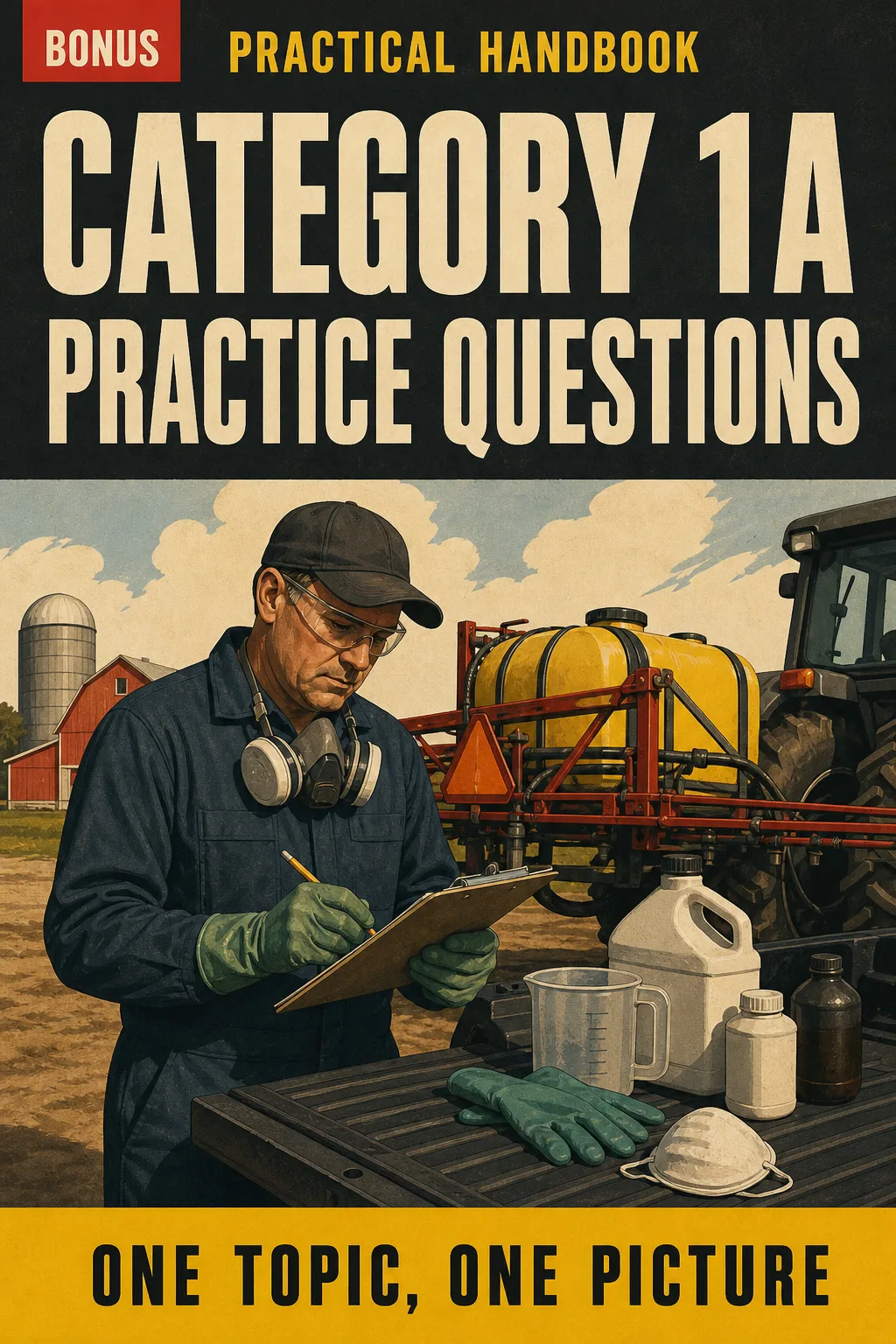
Category 1A Practice Questions

BONUS 1: «Category 1A Practice Questions»

Value on its own: US$ 17.90

Exam-style questions on labels, calibration, IPM and safety, with every answer explained, so you find your weak spots before test day, not during it.

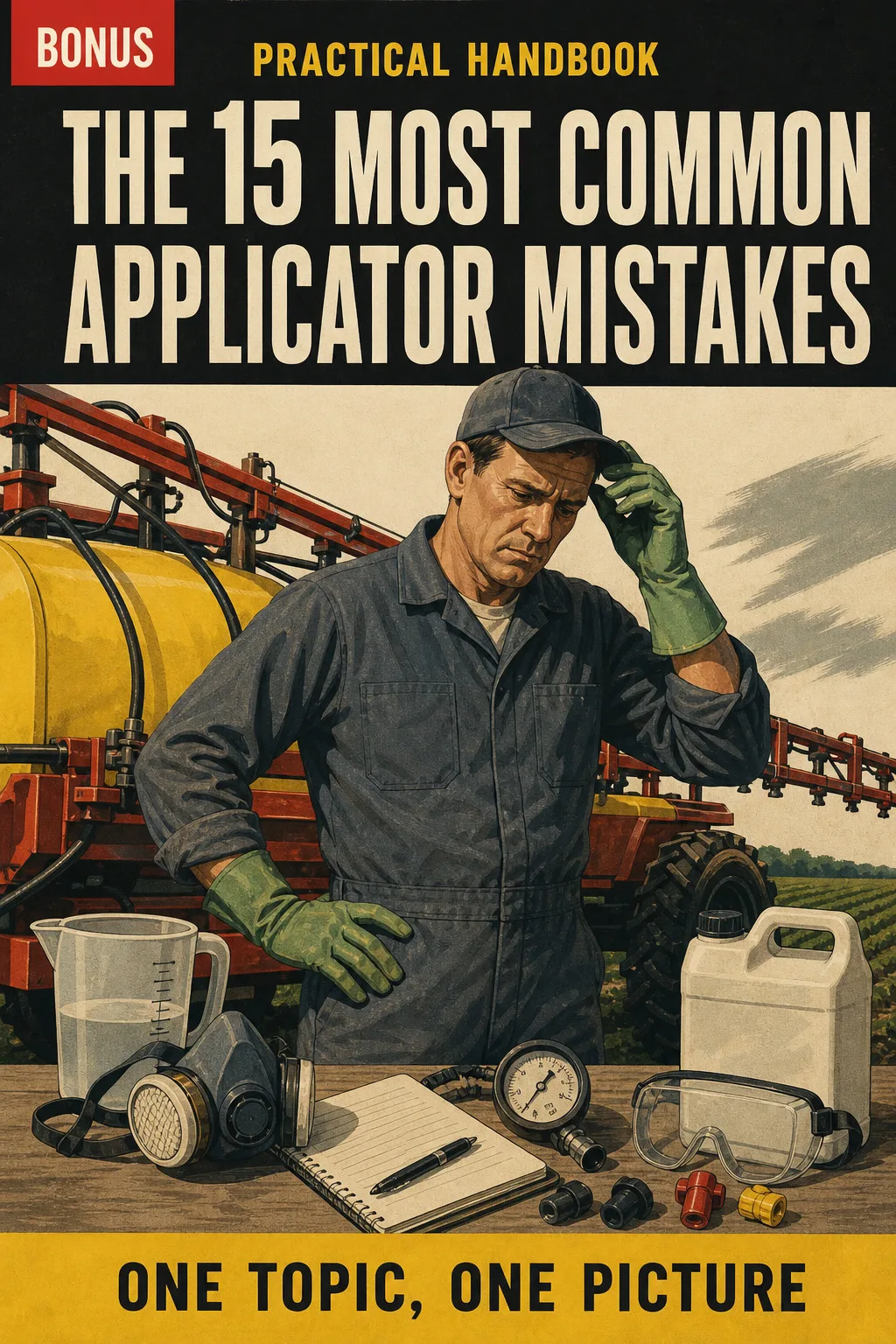
The 15 Most Common Applicator Mistakes

BONUS 2: «The 15 Most Common Applicator Mistakes»

Value on its own: US$ 14.90

Each mistake drawn before and after, from mixing up REI and PHI to taking off gloves in the wrong order, so you review the tricky parts in one evening.

Pesticide Applicator Illustrated with 2 Free Books

  • Pesticide Applicator Illustrated: 68 illustrated pagesUS$ 63
  • BONUS 1: Category 1A Practice QuestionsUS$ 17.90
  • BONUS 2: The 15 Most Common Applicator MistakesUS$ 14.90
  • High-resolution PDF to printIncluded
Total value US$ 95.80
YOUR PRICE:
US$ 27
You save US$ 68.80
YES, I WANT PESTICIDE APPLICATOR ILLUSTRATED FOR US$ 27

📄 This is a digital PDF book sent to your email: nothing is printed or shipped.

Secure purchaseEncrypted payment30-day guarantee

PDF by email: We email you Pesticide Applicator Illustrated as a PDF, together with the two free books. It's a single payment: no installments, no extra charges.

Who This Book Is For

You're studying for your license

You're studying for your license

One topic per page, so a short evening session covers a whole subject: the label, the math or the rules, drawn and in order.

Your exam date is close

Your exam date is close

The final review puts the whole label and all the numbers on one page each, and the practice questions show your weak spots before test day.

You already spray for a living

You already spray for a living

You know the field work. The book shows the exam side of it, and it's printable to keep in the truck.

Everything You Get Today

US$ 95.80US$ 27
YES, I WANT PESTICIDE APPLICATOR ILLUSTRATED FOR US$ 27

📄 This is a digital PDF book sent to your email: nothing is printed or shipped.

30DAYS
GUARANTEE

30-Day Guarantee

Try Pesticide Applicator Illustrated for 30 days, bonus books included.

We refund everything if the file won't open, if the book isn't what you see here, if you were charged twice or if the email doesn't arrive. Just email us.

You pay once. No subscriptions.

Frequently Asked Questions

I've been spraying for years, but I'm bad at math. Is this for me?

Yes. It doesn't treat you like a beginner: it starts from the work you already do and shows the exam side of it. The calibration math comes in 4 numbered steps, then worked problems with real numbers: gallons per acre, ground speed, product per tank, ounces per 1,000 sq ft, one line at a time.

What rules and manuals is it based on?

It covers the Core and the agricultural plant category, built from the federal rules every state's exam follows: EPA's certification rule (40 CFR Part 171), the Worker Protection Standard (40 CFR Part 170), FIFRA, the National Pesticide Applicator Certification Core Manual and state Category 1A study manuals. Category names, fees and some rules change by state, so every state-specific figure is marked for you to check in your state's manual.

Does it work for my state's exam, and is it official?

It covers the national Core material and the agricultural plant category that many states call 1A. Your state may use a different name or number and may add its own laws section, so check your state lead agency's manual. It's an independent study book, not official material. Rates always come from the product label, never from this book.

Does it replace my state's training or study manual?

No. Use it alongside them: it draws what the manual explains in paragraphs, so the manual is easier to review.

Are the practice questions the real exam questions?

No. They're written for this book, on labels, calibration, IPM and safety, with every answer explained. They are not official questions from any exam.

When and how do I get it?

The book and the 2 bonus books come as PDFs by email, to the address you enter at checkout.

Do I have to pay every month?

No. It's a one-time payment. The PDFs are yours to keep.

Can I have it on paper?

Yes. The PDFs are printable, at home or at a print shop, so you can keep a copy in the truck.

How does the refund work?

You have 30 days. We refund everything if the file won't open, if the book isn't what you see on this page, if you were charged twice or if the email doesn't arrive: just email us.

Before You Close This Page

No more rereading the manual with nothing sticking.

The calibration math, drawn step by step.

You walk into the exam knowing where everything is.

Drawings make studying faster.

The book is right below.

One-time payment: US$ 27 · Guarantee: 30 days · PDF by email

YES, I WANT PESTICIDE APPLICATOR ILLUSTRATED FOR US$ 27

📄 This is a digital PDF book sent to your email: nothing is printed or shipped.